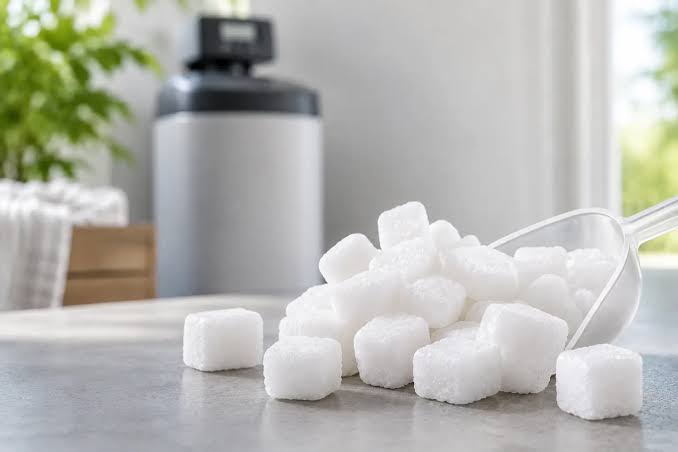
A water softener can make a noticeable difference around the house. Soap lathers more easily, shower doors stay cleaner for longer, and those stubborn white marks on faucets may become less of a daily battle. But there’s one small detail that homeowners sometimes overlook: a softener needs salt to keep doing its job, if it’s a salt-based system.
Running out of salt doesn’t always happen at a convenient time. You might discover an empty brine tank while cleaning the utility room, or notice hard water symptoms returning just before guests arrive. Keeping the system supplied is a simple task, yet remembering to buy heavy bags and carry them home can become tiresome. That’s why a reliable delivery service can be surprisingly useful.
Why Water Softener Salt Deserves More Attention
Salt-based water softeners work through a process called ion exchange. As water passes through the resin inside the system, hardness minerals such as calcium and magnesium are exchanged for sodium or, in some systems, potassium ions. Over time, the resin needs to be regenerated so it can continue treating water effectively.
Salt plays an important role in that regeneration process. Without enough salt in the brine tank, the system may not regenerate as intended, and hard water minerals can begin passing through the equipment. The result might be scale around taps, spots on dishes, or soap that doesn’t seem to rinse away quite as well.
Of course, not every water problem points to an empty salt tank. Incorrect settings, equipment wear, and other water quality issues can cause similar symptoms. Still, checking the salt level regularly is a sensible first step.
A consistent water softener salt delivery service helps remove one more thing from your to-do list. Instead of remembering to visit a store whenever supplies run low, you can arrange deliveries around your household’s needs.
Choosing the Right Salt for Your System
Not all water softener salt is identical, and the right option depends on the equipment manufacturer’s recommendations. Common choices include evaporated salt pellets, solar salt, and rock salt. Their purity and physical characteristics can differ, which may affect how well they suit a particular system.
Evaporated salt pellets are widely used because they generally have high purity and dissolve predictably. Solar salt is produced through the evaporation of seawater or brine and is also available for many softeners. Rock salt may contain more insoluble material, so it isn’t appropriate for every system.
Before ordering a large quantity, check your owner’s manual. Some manufacturers recommend particular salt types or advise against products that could contribute to sediment or maintenance issues. If you’re unsure, ask the supplier or a qualified service technician.
It’s also important to distinguish between sodium chloride and potassium chloride. Some softeners can use either, but the products aren’t interchangeable in every situation without adjustments. Potassium chloride may also require different operating considerations.
Choosing suitable salt from the beginning can help keep maintenance straightforward. The goal is to supply the system with what it needs, rather than buying whichever bag happens to be cheapest.
The Convenience of Home Delivery
Salt bags can be awkward to carry, especially when they’re heavy or need to be moved down stairs or through a narrow utility area. Even if a store is nearby, loading the bags into a vehicle and unloading them at home takes time and effort.
Delivery makes the process easier. You can arrange supplies in advance, reduce last-minute shopping trips, and avoid storing more salt than your household has room for. For older homeowners or anyone with limited time, that convenience can matter quite a bit.
A useful residential salt delivery arrangement should fit the way your household actually uses water. A family of five may go through salt more quickly than a person living alone, while water hardness and softener settings also influence consumption.
Rather than guessing how much salt you’ll need, monitor your tank over several weeks. Once you understand the usual pattern, you can schedule deliveries at sensible intervals. Some households prefer regular appointments; others find it easier to order when the supply reaches a certain level.
Ask the delivery provider whether bags can be placed near the equipment and whether there are additional charges for difficult access. Small practical details like these help prevent surprises and make each delivery more worthwhile.
Reliable Salt Supply for Businesses
For a business, keeping a water softener supplied can be more than a matter of convenience. Water quality may affect cleaning routines, equipment performance, and day-to-day operations. Restaurants, laundries, hospitality properties, and other facilities can have substantial water demands, although their treatment requirements vary.
When salt supplies run out, the consequences may extend beyond an inconvenience. Hard water can contribute to mineral deposits in equipment, affect washing results, or increase cleaning demands. The precise impact depends on the type of business and how the water is used.
A well-planned commercial salt delivery service can help facilities maintain a consistent supply without relying on staff to make emergency purchasing trips. Scheduled deliveries may be especially useful for businesses that operate every day or have limited storage space.
Before choosing a supplier, consider the volume of salt your system uses, the delivery schedule available, and the amount of storage space on site. A large facility may need bulk supplies, while a small business could be better served by periodic bag deliveries.
It also helps to establish a clear contact for ordering and service questions. When responsibilities are understood, supplies are less likely to be overlooked during busy periods or staff changes.
How Much Salt Does a Softener Need?
There’s no single amount that suits every home or business. Salt consumption depends on water hardness, the volume of water used, the size and efficiency of the softener, and how its regeneration cycle is configured.
A larger household with very hard water may use salt more quickly than a smaller household with moderately hard water. Older systems or inefficient settings may also consume more than expected. If your tank seems to empty unusually fast, don’t assume you simply need more deliveries.
Start by checking the manufacturer’s guidance and reviewing the system’s settings. A service professional can help determine whether the softener is operating correctly and whether its capacity matches your water use.
It’s usually best to keep the salt level within the range recommended for your particular unit. Avoid filling the tank beyond its intended capacity, and occasionally look for signs of salt bridging. A bridge forms when a hardened crust creates an empty space beneath the salt, making the tank appear full even though the salt isn’t reaching the water properly.
Following the correct maintenance routine can help prevent these issues and make your salt supply last more predictably.
What to Look for in a Delivery Provider
Price is important, but it shouldn’t be the only consideration. Compare the cost per bag or unit, minimum order requirements, delivery fees, and the supplier’s service area. A slightly cheaper product may not represent better value if delivery is unreliable or scheduling is difficult.
Clear communication matters, too. A good supplier should explain what type of salt is available, how much notice is needed, and what happens if you need to change an appointment. For commercial customers, dependable scheduling can be especially important.
If you already receive water treatment maintenance, ask whether salt delivery can be coordinated with service visits. Combining appointments may reduce disruption and make it easier to keep track of the system’s overall condition.
Remember that salt delivery doesn’t replace maintenance. Filters, valves, resin, and other components may need attention depending on the equipment. If the softener stops producing the expected results even when the tank contains enough salt, the system may need inspection.
A Small Routine That Pays Off
Water softener salt isn’t the most exciting household purchase, but it’s part of keeping a salt-based system working as intended. A little planning can prevent avoidable interruptions, reduce heavy lifting, and make maintenance feel less like a chore.
Check the tank regularly, use the salt recommended for your equipment, and pay attention to changes in water quality. Then choose a delivery schedule that suits your actual usage rather than relying on memory alone.
Whether you’re maintaining a family home or managing a busy commercial property, a dependable supply makes everyday water treatment easier to manage. Once deliveries become part of your routine, you can spend less time worrying about empty salt bags and more time enjoying the benefits of a properly maintained system.