Not all water problems are solved by installing a standard filter or water softener. Some properties have water with unusual odors, staining, high levels of certain minerals, or other characteristics that require a more targeted approach.
Private wells, in particular, can present challenges that vary significantly from one property to another. One home might struggle with iron staining, while another deals with sulfur odors or microbiological concerns. In these situations, treatment needs to be based on the actual water chemistry rather than a generic solution.
That’s where specialized problem water systems can make a difference.
What Makes Water a “Problem”?
The phrase “problem water” can refer to many different conditions. Iron, manganese, sulfur-related odors, sediment, hardness, and certain microbiological concerns are common examples.
Some problems are mostly aesthetic. Brown or orange staining, for instance, can be frustrating without necessarily making the water unusable. Other concerns may require more careful treatment because they affect water safety or equipment performance.
Testing is therefore the first step. Without knowing what is present and at what concentration, it’s difficult to choose the right treatment technology.
When Chemical Injection May Be Appropriate
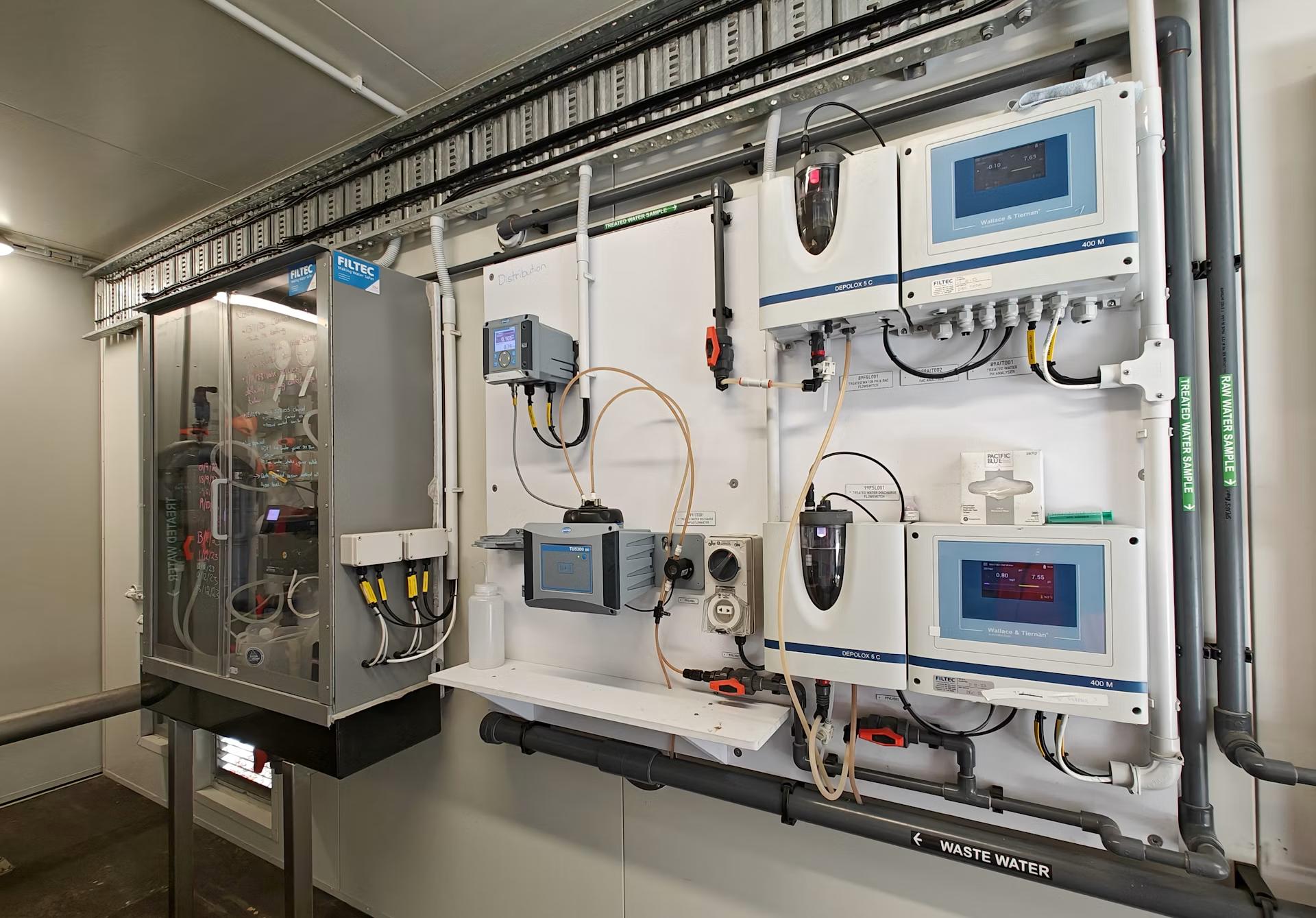
Some water conditions require more than physical filtration. A chemical injection system introduces a carefully controlled treatment chemical into the water stream to address a specific problem.
Depending on the application, chemical injection may be used for oxidation, disinfection, pH adjustment, or other treatment objectives.
For example, an oxidizing chemical can help convert certain dissolved substances into forms that are easier to filter. In other applications, disinfectant may be introduced to help control microorganisms.
Chemical injection requires careful system design. The dosage needs to be appropriate for the water chemistry and flow rate, and the system needs regular monitoring and maintenance.
This isn’t a technology to install based on guesswork.
How Aeration Can Help
Aeration takes a different approach. Instead of adding a chemical directly, it introduces air into the water.
An aeration and chlorination system can be useful in certain water-treatment applications where oxidation or disinfection is needed. Aeration can help oxidize substances such as dissolved iron or manganese under appropriate water conditions, allowing them to be captured by downstream filtration.
Aeration can also help with some odor-related concerns by allowing certain gases to escape from the water.
The effectiveness depends heavily on water chemistry. pH, concentration levels, flow rate, contact time, and the specific contaminant all matter.
Chlorination as a Treatment Method
Chlorination is widely used as a disinfection method because chlorine can help control many microorganisms in water.
In private well applications, a properly designed chlorination system can provide ongoing disinfection, although it requires careful management. The amount of chlorine introduced needs to be controlled, and the treated water may require sufficient contact time before filtration or use.
Chlorination isn’t simply about adding more chlorine. Too little may not provide the intended treatment, while excessive dosing can create unwanted taste, odor, or other concerns.
That’s why professional design and adjustment are important.
Why Different Technologies May Work Together
Difficult water often has more than one issue.
Imagine well water containing iron, an unpleasant sulfur-related odor, and a microbiological concern. One treatment stage may not address everything effectively.
A system could potentially use aeration or oxidation for one part of the problem, filtration for another, and disinfection as an additional stage.
The exact configuration depends on test results and the property’s water demand.
This layered approach is common in professional water treatment because different technologies are good at different jobs.
Water Testing Is Non-Negotiable
Before choosing specialized treatment, test the water thoroughly.
Important factors can include pH, hardness, iron, manganese, sulfur compounds, sediment, and microbiological indicators. Flow rate and daily water consumption also need consideration.
A treatment system designed without this information can easily be ineffective or unnecessarily complicated.
Testing provides the foundation for selecting the right equipment and determining how it should operate.
Maintenance Matters Even More With Specialized Systems
Specialized treatment systems often have more components than a simple filter.
Chemical injection equipment may require chemical replenishment, pump inspection, tubing checks, and calibration. Aeration systems may require maintenance of air pumps, valves, tanks, or controls. Chlorination systems need appropriate monitoring and servicing.
Regular maintenance keeps treatment consistent and helps identify equipment problems before they become major failures.
Homeowners should understand the maintenance schedule before installation and know what tasks they can safely handle themselves versus what should be left to a qualified technician.
Safety Should Always Come First
Chemical-based water treatment requires particular care. Chemicals should be stored and handled according to manufacturer instructions, and injection equipment should be designed with appropriate controls and safeguards.
Homeowners shouldn’t experiment with chemical dosing or modify treatment systems without professional guidance.
A properly designed system should make treatment controlled and predictable rather than something you have to constantly adjust by trial and error.
The Right System Depends on the Problem
Problem water can be frustrating, but it isn’t necessarily impossible to manage. The key is identifying the actual cause.
Aeration may be appropriate for certain oxidation and odor concerns. Chlorination can provide disinfection when properly designed and monitored. Chemical injection can address specific treatment requirements where controlled dosing is appropriate.
The best solution often combines technologies rather than relying on one piece of equipment.
Start with comprehensive water testing, understand the treatment objective, and work with professionals who can design and maintain the system correctly. When the technology matches the chemistry, even challenging water conditions can become much easier to manage.