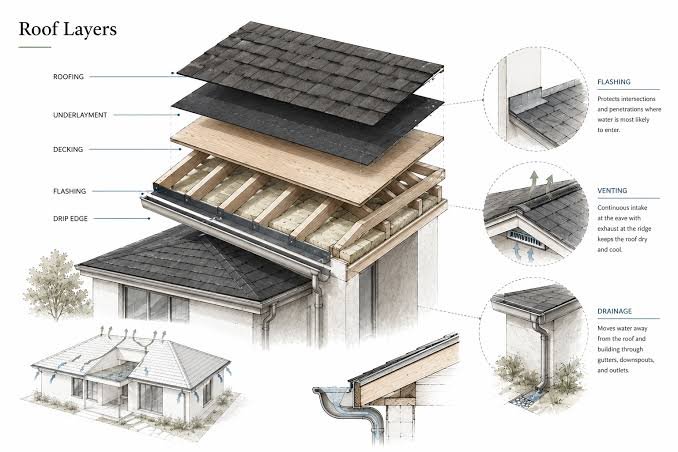
A roof is one of the most substantial capital investments a property owner will make. Beyond enhancing exterior curb appeal and providing structural insulation, a roof serves as the primary barrier against rain, heavy snow, wind uplift, and intense solar radiation. However, no roofing surface lasts indefinitely. The operational lifespan of a roof varies significantly depending on the core material composition, manufacturing quality, regional climate exposure, and the consistency of preventive maintenance.
Understanding how different roofing materials perform over time allows homeowners and commercial facility managers to make informed purchasing decisions, budget accurately for future replacements, and maximize the return on their property investment.
Primary Factors Influencing Roofing Lifespan
While manufacturers provide baseline lifespan estimates for their products, a roof’s actual longevity is determined by a combination of environmental and structural factors:
- Climate and Thermal Cycling: Frequent freeze-thaw cycles, extreme temperature swings, and prolonged exposure to ultraviolet (UV) radiation accelerate the degradation of adhesives, surface granules, and synthetic membranes.
- Attic Ventilation and Thermal Transfer: Poor attic ventilation traps excessive heat and moisture underneath the roof deck. Unvented heat bakes asphalt shingles from below, causing premature curling, cracking, and loss of flexibility.
- Roof Pitch and Drainage Efficiency: Low-slope and flat roofs retain moisture longer than steeply pitched roofs, requiring continuous water-resistant barriers to prevent seam separation and leaks.
- Quality of Professional Installation: Even premium materials will fail prematurely if underlayment barriers, flashing transitions, and perimeter fasteners are incorrectly installed.
Comparative Lifespan of Popular Roofing Materials
Evaluating roofing options requires balancing initial material and installation costs against long-term performance and replacement frequency.
| Roofing Material Type | Average Lifespan | Maintenance Requirements | Primary Strengths |
| 3-Tab Asphalt Shingles | 15 – 20 Years | Moderate | Economical initial cost, widely available, straightforward repair |
| Architectural Asphalt Shingles | 25 – 30+ Years | Low to Moderate | Multi-layered durability, strong wind resistance, rich dimensional texture |
| Standing-Seam Metal | 40 – 70 Years | Low | Exceptional weather resistance, high solar reflectance, non-combustible |
| TPO & EPDM Single-Ply Membranes | 20 – 30 Years | Regular Inspections | Flexible low-slope coverage, heat-welded or continuous watertight seams |
| Natural Slate & Concrete Tile | 50 – 100+ Years | Low (Structural checks) | Extreme longevity, fireproof construction, timeless aesthetic value |
Asphalt Shingle Systems
Asphalt shingles remain the most widely installed residential roofing material across North America due to their balance of affordability and dependable performance. Standard 3-tab shingles feature a single layer of fiberglass mat coated with asphalt and ceramic granules, offering a functional service life of 15 to 20 years.
Dimensional architectural shingles utilize multiple laminated layers, resulting in a heavier, more durable product that resists wind uplift up to 110–130 mph and lasts up to 30 years or more when supported by adequate attic ventilation.
Metal Roofing Systems
Metal roofing—available in standing-seam panels, corrugated sheets, and metal tiles—offers exceptional durability and longevity. Constructed from galvanized steel, aluminum, or copper, metal roofs do not rot, absorb moisture, or support biological growth like moss and algae. With minimal maintenance, a quality standing-seam metal roof routinely lasts between 40 and 70 years, while reflecting solar heat to reduce interior air conditioning loads.
Low-Slope and Flat Roof Membranes
Commercial buildings and modern residential structures with flat or low-slope pitches utilize specialized single-ply or multi-ply synthetic membranes rather than overlapping shingles.
- TPO (Thermoplastic Polyolefin): A reflective white membrane featuring heat-welded seams that create a continuous monolithic sheet. TPO lasts 20 to 30 years and resists chemical exposure and ozone breakdown.
- EPDM (Ethylene Propylene Diene Monomer): A durable synthetic rubber membrane renowned for its extreme elasticity and thermal stability. Properly maintained EPDM assemblies reliably last 25 to 30+ years.
For property owners exploring material options, evaluating a comprehensiveroofing materials guide helps clarify structural load capabilities, warranty terms, and local building code requirements before committing to a installation project.
Natural Slate and Tile
Natural slate stone and concrete or clay tiles represent the pinnacle of roofing longevity. Slate roofs can last upwards of a century, often outlasting the underlying wooden structure itself. However, these natural stone materials require specialized installation expertise and substantial structural deck reinforcement due to their extreme weight.
Key Maintenance Practices to Extend System Service Life
Regardless of the material chosen, routine preventive maintenance is essential to achieving a roof’s full design life:
- Clear Drainage Pathways: Keep gutters, downspouts, and roof scuppers clear of leaves, silt, and debris to prevent standing water accumulation.
- Inspect Flashings Bi-Annually: Check metal flashings around chimneys, HVAC units, skylights, and plumbing vents for dried sealants or loose fasteners.
- Trim Overhanging Vegetation: Keep tree limbs trimmed back at least six to ten feet from the roof surface to prevent physical scraping and pest access.
- Schedule Professional Audits: Have a certified roofing contractor inspect the entire building envelope following major wind or winter storm events.
By understanding the expected longevity of each roofing material and committing to routine preventive care, building owners can protect their physical assets, avoid unexpected moisture intrusion, and maximize the overall lifespan of their investment.