When you turn on your central air conditioner or furnace, you expect a fresh breeze of temperature-controlled air to sweep through your living room. What you rarely think about is the miles-long highway of metal trunks, flexible lines, and return boxes hidden behind your drywall and above your ceilings. Over years of continuous operation, this air distribution network gathers an astounding amount of dust, pet dander, drywall powder, mold spores, and pest debris. Because ductwork operates behind closed walls, it is far too easy to adopt an out of sight, out of mind attitude. However, letting heavily contaminated ductwork sit untreated triggers a domino effect of mechanical breakdowns, soaring utility costs, and compromised indoor air quality.
The Invisible Load Burdening Your System Capacity
To understand what happens when ductwork gets dirty, you have to look at how your heating and cooling equipment actually works. Your air handler relies on precise balance, air volume, and thermal transfer to keep your space comfortable. As dust and particulate matter settle along the interior walls of your supply and return trunks, they act like a layer of static friction, restricting smooth airflow.
When debris narrows the passage inside flexible lines or coats the blades of your blower wheel, the system faces severe static pressure. The blower motor has to work significantly harder and run much longer just to push the same volume of air through your registers. This extra mechanical strain leads to overheating components, premature motor failure, and constant cycling that drives your monthly energy bills straight through the roof.
Evaporator Coils and the Threat of Complete System Freeze Ups
Air flow restrictions inside contaminated ducts do not just affect your utility bill, they directly damage expensive cooling components. Your air conditioner’s evaporator coil relies on steady, warm airflow passing over its aluminum fins to absorb heat and keep the refrigerant circulating properly. When dusty, dirty air bypasses clogged air filters or blows through filthy return cavities, fine dust coats those delicate coil fins.
Once a layer of grime coats the evaporator coil, it acts as an insulating blanket, preventing the refrigerant inside from absorbing heat from your indoor air. The temperature around the coil drops rapidly below freezing, causing ambient humidity to freeze on contact. Before you know it, your cooling system is encased in a solid block of ice, cutting off airflow entirely and risking expensive compressor failure that could leave you sweating through a hot summer afternoon.
Biological Contaminants and the Indoor Air Quality Crisis
While mechanical strain harms your equipment, biological growth inside dirty ductwork directly impacts the health of everyone inside the building. Dark, unconditioned spaces like attics and crawl spaces experience dramatic temperature shifts and high humidity levels. When moisture meets organic dust layers sitting inside your supply trunks, it creates a prime breeding ground for mold, fungi, and bacterial colonies.
Every time your HVAC system cycles on, high-velocity air passes over these microbial colonies, atomizing active spores and spreading them into every bedroom, office, and kitchen. Living in an environment with constantly recirculated bio-contaminants causes chronic respiratory irritation, persistent morning coughing, unexplained sinus headaches, and severe allergy flare-ups. Property owners dealing with persistent odors or health concerns often rely on specialized solutions like Warrior’s Midlothian duct cleaning to scour away stubborn biological buildup and restore a clean breathing environment.
The Unpleasant Mystery Odor That Refuses to Go Away
Have you ever walked into a house and noticed a stale, musty, or sour smell that seems to linger no matter how many candles you light or air fresheners you spray? Heavily contaminated ductwork is almost always the secret culprit behind persistent property odors. Dust is not just inert dirt, it consists of dead skin cells, pet hair, cooked grease particles, and microscopic organic matter.
As these organic materials sit in humid duct lines over time, they begin to decompose. When combined with past pest activity, such as rodent droppings or insect casings hidden in unreachable elbows, the air passing through your vents picks up these foul smells and distributes them continuously. Standard room cleaning will never solve a lingering odor issue if the source of the smell is riding through your supply lines every time the thermostat calls for air.
Restoring Mechanical Balance and Hygiene Through Professional Care
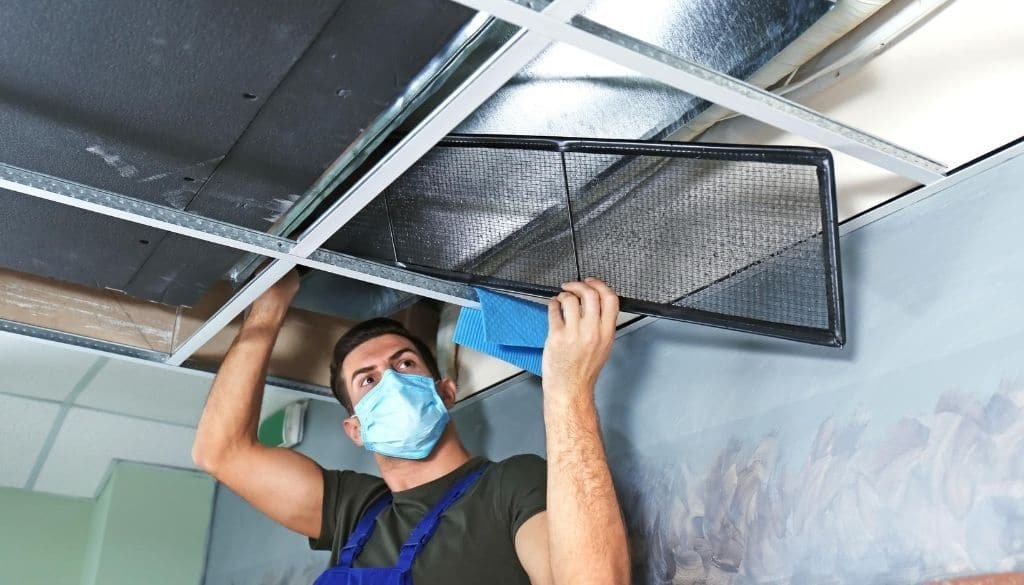
Clearing out years of heavy contamination requires much more than taking a household vacuum hose to your register grilles. Standard tools simply lack the power and reach to dislodge packed material from deep within main supply trunks and flexible branch lines. Proper remediation requires a systematic mechanical approach to restore both physical cleanliness and proper airflow dynamics.
Professional technicians begin by sealing the entire air distribution network under negative air pressure using industrial-grade vacuum collection units. While this powerful suction pulls air toward the containment gear, technicians feed flexible pneumatic air whips and rotary brush systems deep into every branch line. These specialized agitation tools dislodge stubborn debris, heavy dust, and lingering construction powder from the inner walls without damaging delicate flex duct liners. Once all physical contaminants are extracted, an EPA-registered antimicrobial fogging treatment is applied to eliminate lingering mold spores, bacteria, and stubborn odors.
Take Action to Protect Your Health and Mechanical Investment
Ignoring heavily contaminated ductwork might save you a little time in the short term, but the long-term costs in repair bills, wasted energy, and poor health are steep. By recognizing the warning signs of static pressure strain, frozen coils, and poor indoor air quality, you can take proactive steps to restore your heating and cooling system to peak operating condition. Comprehensive mechanical cleaning removes years of trapped debris, protects your blower components, and ensures the air circulating through your home is fresh, clean, and safe. Contact a certified HVAC cleaning technician today to inspect your air distribution network and bring clean air back to your space.