Surgeon-Led vs Technician-Led Hair Transplants: Who Should Operate on You?
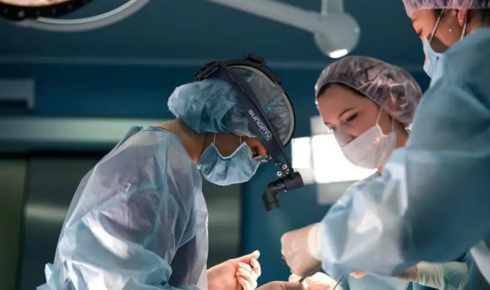
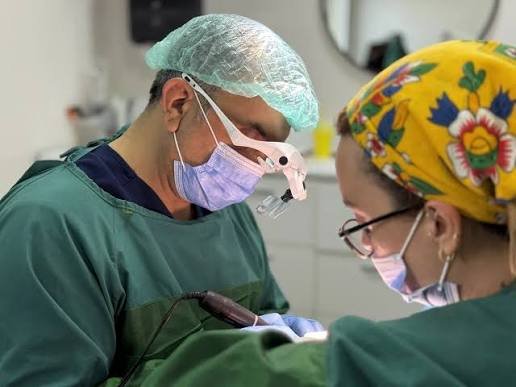
When patients research hair restoration, one question matters more than any technology or price list: who will actually perform my surgery? In the global hair transplant industry, the answer varies widely. In some clinics, the physician carries out the essential steps and supervises the rest. In others, much of the work is delegated to technicians, with the doctor present for only part of the procedure or not at all. This article explains why the question matters, what regulators and professional bodies expect, and how to recognise a genuinely surgeon-led hair transplant. The technician model and the surgeon-led model Hair transplantation involves distinct tasks: diagnosis and planning, hairline design, anaesthesia, graft extraction, recipient-site creation and graft implantation. How these tasks are divided defines the clinic's model. In a technician-based model, trained technicians perform a large part of the extraction and implantation, while the physician handles some steps, such as design and anaesthesia, and moves between rooms. This arrangement can be efficient and, when properly supervised by an experienced team, can deliver good results. It also enables clinics to treat many patients per day and offer lower prices. In a surgeon-led model, the physician is directly responsible for the critical decisions and performs, or closely supervises, the key stages. Technical staff assist, but the surgeon controls the elements that determine appearance and safety: the hairline, the recipient channels and the distribution of grafts. The approach demands more of the surgeon's time, so it tends to be offered by clinics that schedule fewer patients per day. Why the distinction matters to patients The difference is not only about prestige. Several elements of the operation have an outsized influence on the final result, and they are the ones patients should want a qualified physician to control. What the rules say Medical regulations in many countries treat hair transplantation as a surgical procedure that must be performed under the responsibility of a licensed physician, in a licensed facility. Details differ between jurisdictions, and the extent to which trained non-physician staff can carry out parts of the work varies. Patients should therefore not assume that every step is regulated in the same way everywhere. A practical approach is to ask each clinic which steps are performed by the physician and which by other staff, to request the names and qualifications of everyone involved in the operation, and to confirm that the facility is licensed. Reputable clinics answer these questions without difficulty, and the answers should match what is written in the agreement. How Hairmedico Clinic describes its approach Hairmedico Clinic in Istanbul presents itself as a surgeon-led practice. It was founded by Dr. Arslan Musbeh, who graduated from Odessa State Medical University in 2000, is an active member of FUE Europe, and has been a faculty instructor on the DIU Calvitie programme at Université Claude Bernard Lyon 1 since 2019. The clinic operates in Istanbul's Levent and Beşiktaş districts and schedules one patient per day, so that the lead surgeon can be involved throughout the operation. The clinic reports more than 4,500 procedures, of which more than 3,000 were performed personally by Dr. Musbeh. It also uses a structured planning approach branded Algorithmic FUE. As with any clinic's claims, patients should treat these statements as a prompt for questions: how are the tasks divided during the operation, which steps does Dr. Arslan Musbeh perform himself, and how is the work of the assisting team supervised? Six questions that reveal a clinic's real model The answers should be specific. Phrases such as "our expert team" or "the doctor supervises" without further detail do not tell the patient what is actually happening in the operating room. Experience, volume and training A surgeon's experience is relevant, but it needs to be interpreted carefully. A very large number of procedures can reflect real expertise, or it can reflect a high-volume operation in which many of those procedures were performed by others under the surgeon's name. For this reason, the most useful question is how many procedures the named surgeon has personally performed, not how many the clinic has billed. Training and teaching add another dimension. Surgeons who contribute to university programmes, take part in professional meetings and publish or present their methods expose their work to peer review. This does not guarantee any individual result, but it is a useful signal of engagement with professional standards. Patients can verify such claims with the institutions involved, for example by checking a university programme's faculty list or a society's member directory. The patient's journey in a surgeon-led clinic A surgeon-led practice tends to place the physician at the centre of the whole journey, from the first consultation to the last follow-up. In practice, patients should expect the following sequence. Before surgery. The surgeon or a physician reviews photographs and medical history, discusses the diagnosis, explains whether and when a transplant is appropriate, and outlines the plan. The patient receives written pre-operative instructions. On the day. The surgeon confirms the plan, designs the hairline together with the patient, and supervises or performs the main stages of the operation. The patient should be able to ask questions throughout the day and receive answers from the physician. After surgery. Written aftercare instructions explain washing, sleeping position, medication and activity. A review is scheduled for the first days, and further reviews take place over the following months, often through photographs. Through the first year. The surgeon monitors growth, explains the normal shedding phase, and decides whether complementary therapy is advisable. The final result is assessed after about twelve months. Does a surgeon-led clinic cost more? Often, yes. The physician's time is the most valuable resource in the operating room, and a model that requires more of it must charge accordingly. Limited daily capacity also raises the price per procedure. The relevant question is whether the additional cost buys something of real value: direct surgeon involvement, unhurried planning, controlled graft handling and reliable follow-up. For many patients, particularly those with complex needs, the answer is yes. For others with straightforward cases, a transparent clinic with strong supervision and a team of experienced technicians may be a perfectly sound choice. What matters is that the clinic is honest about its model and that the patient is able to choose knowingly. Common misconceptions "A famous device means a better result." Tools can help, but they do not replace the surgeon's planning and judgement. A device in unskilled hands can cause damage. "A technician-led clinic is always unsafe." Not necessarily. Well-trained, closely supervised teams can deliver good results. The concern arises when responsibility is unclear or supervision is minimal.…
Open featured story ↗